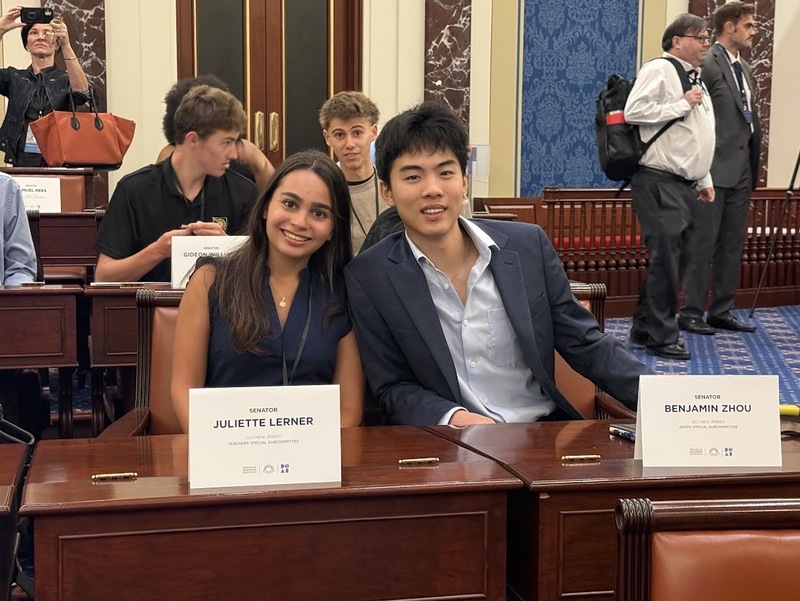
Two Westfield High School students, Ben Zhou and Juliette Lerner, joined Superintendent Dr. Raymond González in Boston this summer for a unique national conversation about the future of artificial intelligence in public education.
From July 17–19, 98 high school students representing all 50 states participated in the National AI Student Senate as part of America’s Youth AI Festival. The event brought students together to examine the opportunities and challenges associated with artificial intelligence and to develop a student-authored framework for its responsible use in schools.
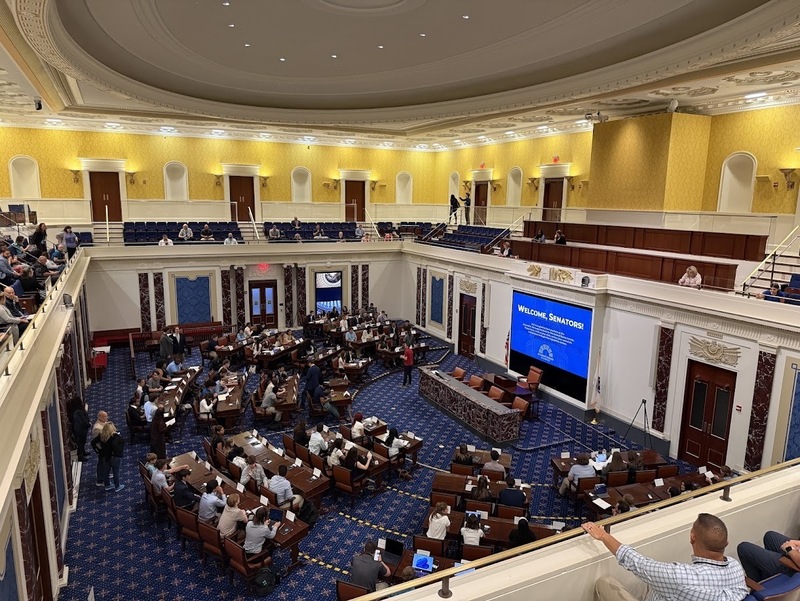
The Student Senate took place at the Edward M. Kennedy Institute for the United States Senate, where participants worked in a full-scale replica of the U.S. Senate chamber. Students were organized into subcommittees and followed a legislative process that included discussion, debate, amendments, and voting.
Their work resulted in the STUDENTS FIRST Act of 2026, a proposed national framework for artificial intelligence in K–12 education. The measure passed the Student Senate by a vote of 82–16.
For Ben, one of the most valuable parts of the experience was working with students from across the country who brought different perspectives to the conversation.
“Because there were 100 total student senators from all 50 states, an abundance of viewpoints were represented, proving to be invaluable when trying to craft such a wide-reaching policy,” he said.
Juliette similarly highlighted the importance of student voice in shaping policies that will directly affect students.
“The experience was definitely a once-in-a-lifetime opportunity,” she said. “It was extremely rewarding to know that the debates we were having and work we were producing would be seen by thousands of school districts around the country to make an actual difference.”
The STUDENTS FIRST Act addresses a range of issues facing schools as artificial intelligence becomes increasingly integrated into education, including AI literacy, academic integrity, student privacy, fairness, human oversight, and the importance of preserving authentic learning and relationships.
Among its recommendations, the framework calls for age-appropriate AI literacy instruction, clear expectations for appropriate student use of AI, protections for sensitive student information, meaningful human review of allegations involving improper AI use, and safeguards against relying solely on artificial intelligence for consequential decisions such as grading or discipline.
The proposal also distinguishes between using AI as a tool to support learning and allowing technology to replace student thinking and creativity.
Both students said the experience reinforced the importance of bringing student perspectives into policy discussions, particularly as many school districts continue developing guidelines for AI use.
Dr. González participated alongside school leaders from across the country as students developed, debated, and ultimately voted on the framework.
“One of the most important lessons from this experience was that we cannot have conversations about the future of AI in education without students at the table,” said Dr. González. “Ben, Juliette, and their peers demonstrated that students are not only ready to engage in these complex conversations, but that their perspectives can help us develop more thoughtful and responsible approaches to the use of AI in our schools.”
The event was organized by Day of AI, MIT RAISE, AASA, The School Superintendents Association, and the Edward M. Kennedy Institute for the United States Senate.
The STUDENTS FIRST Act is intended to serve as a starting point for continued discussion among students, educators, school leaders, and communities nationwide as schools develop policies and practices surrounding artificial intelligence.
Westfield Public Schools continues to examine the responsible and purposeful use of emerging technologies and values opportunities for students to have an active voice in conversations that will shape the future of teaching and learning.